Bojana Aćamović
Marta Buczek
 dr, literaturoznawca, słowacystka, adiunkt na kierunku filologia słowiańska na Wydziale Humanistycznym Uniwersytetu Śląskiego w Katowicach. Prowadzi badania z zakresu translacji w obrębie literatur zachodniosłowiańskich, w perspektywie teoretycznej, historycznoliterackiej i historycznokulturowej. Zajmuje się przekładem i recepcją literatury słowackiej w Polsce, ze szczególnym uwzględnieniem literatury XX wieku (m.in. słowackiej prozy liryzowanej) oraz literatury najnowszej. Zakres jej zainteresowań koncentruje się również wokół badań nad recepcją literatury, kulturowych uwarunkowań przekładu, specyfiki przekładu w granicach języków blisko pokrewnych, roli przekładu w badaniach komparatystycznych. Badania poświęcone zagadnieniom przekładu artystycznego w językach Zachodniosłowiańskich rozwija w ramach zespołu badawczego „Zespół badań literatur południowo- i zachodniosłowiańskich w językach oryginalnych oraz w przekładach”. W ramach zespołu prowadzone są literaturoznawczo-przekładoznawcze badania dotyczące między innymi recepcji literatur południowo- i zachodniosłowiańskich w Polsce oraz literatury polskiej w krajach południowo- i zachodniosłowiańskich; historii, poetyki przekładów, krytyki przekładu. W ramach pracy w zespole zajmuje się współredakcją czasopisma naukowego „Przekłady Literatur Słowiańskich”.
Barbara Bibik
Dr hab. in the humanities, professor at the Nicolaus Copernicus University in the Department of Classical Philology. Her research interests focus on Greek tragedy and its reception, as well as issues of translation from classical languages, the heritage of Greco-Roman antiquity and the role and place of women in ancient society. She has published, among others, a monograph Translatoris Vestigia. Projekcje inscenizacyjne wybranych polskich tłumaczy „Orestei” Ajschylosa (2016). She is a co-editor of the publication Za kulisami. Toruńskie spotkania wokół dramatu. Edycja pierwsza (2020).
Tamara Brzostowska-Tereszkiewicz
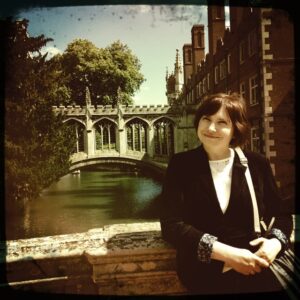
Dr hab. in the humanities, professor at the IBL PAN; Polish and English philologist, literary and translation scholar, translator. Author of the monograph Ewolucje teorii. Biologizm w modernistycznym literaturoznawstwie rosyjskim (Monografie FNP, 2011) and Modernist Translation. An Eastern European perspective. Models, Semanics, Functions (2016), as well as articles on the history of Eastern and Central European literary studies, the history of translation studies, literary comparatistics, and theory of artistic translation.
Ewelina Drzewiecka
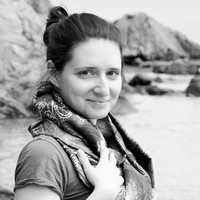 PhD in cultural studies and MA in theology; Assistant Professor at the Institute of Slavic Studies, Polish Academy of Sciences; Associate Professor at the Cyrillo-Methodian Research Centre, Bulgarian Academy of Sciences. Author of the following books: Śmierć Judasza w Biblii i tradycji chrześcijańskiej [The Death of Judas in the Bible and Christian tradition, 2012], Herezja Judasza w kulturze (po) nowoczesnej: Studium przypadku [Judas’ Heresy in (Post)modern Culture: A Case Study, 2016], Юбилейно и модерно. Кирило-методиевският разказ през социализма в България [Jubilee and Modern: The Cyrillo-Methodian Narrative During Socialism in Bulgaria, 2020], and Leksykon tradycji bułgarskiej [Lexicon of Bulgarian Tradition, co-authored, 2011]. Research interests: Bulgarian culture, Judeo-Christian tradition, history of ideas, relation between religion and Modernity, postsecularism.
Nikica Gilić
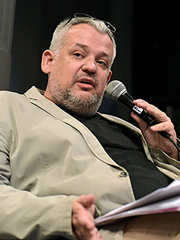 Nikica Gilić (Split, 1973). Since 1998 he has been working at the Department of Comparative Literature (Faculty of Humanities and social sciences). He also teaches at the Academy of Drama Arts in Zagreb. He participated in a number of international symposiums (Split, Zagreb, Zadar, Szeged, Berlin, Timisoara, Graz, Paris, Vienna, London, Preston, Washington DC, Chicago, Boston, Belgrade…). He gave invited lectures at the Humboldt University in Berlin, at University of Regensburg, and Konstanz University (Germany), University of Graz (Austria) and T. Masaryk University in Brno (Czech Republic) and A. Mickiewicz University in Poznan (Poland). In 2015 he became Associated Research Fellow on Graduate School for East and South-East European Studies (Ludwig-Maximilians-Universität München, Universität Regensburg). Main books: as author: Uvod u povijest hrvatskog igranog filma, 2010, Zagreb, Leykam International (2nd ed.: 2011); Uvod u teoriju filmske priče, 2007, Zagreb, Školska knjiga; Filmske vrste i rodovi, 2007 Zagreb, AGM; Web edition 2013; as editor: 1972-2022. Pedeset godina svjetskog festivala animiranog filma – Animafesta Zagreb / Fifty Years of World Festival of Animated Film – Animafest Zagreb, 2022, editor-in-chief: N. Gilić; editors: M. Antauer, S. Mileta, P. Orlić, D. Šuljić, Zagreb, Hulahop d. o. o.; Global Animation Theory. International Perspectives at Animafest Zagreb, 2019, eds. F. Bruckner, N. Gilić, H. Lang, D. Šuljić, H. Turković, New York et al., Bloomsbury; Partisans in Yugoslavia. Literature, Film and Visual Culture, 2015, eds. M. Jakiša and N. Gilić, Bielefeld, transcript.
Robert Grošelj
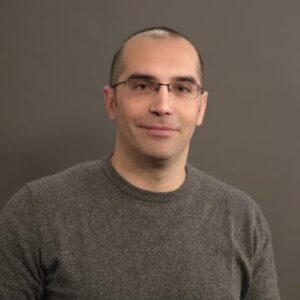 born in 1978 in Postojna (Slovenia), Assistant Professor at the Department of Translation Studies, Faculty of Arts, University of Ljubljana (Slovenia); researcher of Italian and Slavic languages and literatures; his research focuses mainly on linguistic aspects of translation and on Slovene translations in historical perspective; his research interests include also contrastive linguistics (primarily Slovene-Slavic and Slovene-Italian) and comparative syntax of Slavic languages. Robert Grošelj has published several scientific contributions and has (co)authored two monographs: Vezava glagolov umevanja v slovanskih jezikih (Rection of the verbs of thought in Slavic, 2011) and Lipalja vas in njena slovenska govorica (Lipalja vas and its Slovene dialect; co-author 2016).
Zuzanna Jaskuła
born in 1997 in Ciechanów; MA in applied linguistics, a PhD student at the Doctoral School of Humanities of the University of Warsaw.
Alenka Jensterle-Doležal
Alenka Jensterle Doležal was born in Slovenia, but from 2002 lives in Prague. At the University of Ljubljana she graduated from Slovene studies, Comparative literature, and Philosophy, and in 2000 she obtained a PhD with a dissertation on Antigone in South- and West Slavic Drama after the Second World War. She is as an associate professor at the Department of South Slavic and Balkan studies at the Faculty of Arts, Charles University in Prague (Czech Republic). She lectures on Slovene literature, Slavic literatures and theory of literature. She is also the author of five monographs, she edited (and co- edited) five collective volumes and she published several academic articles. Her topics are: myth in literature, Slovene “moderna”, Slovene-Czech relations and Slovene women writers. She is member of the Slovene-Czech project “Transfomations of intimacy in the literary discourse of Slovene “moderna”. She is also a writer: she has published five poetry collections and three prose works.
Bojan Jović
Bojan Jović is a principal research fellow and director of the Institute of Literature and Art in Belgrade, where he has been managing the project “Comparative Research of Serbian Literature” since 2006. He is studying international avant-garde, utopian and science fiction literature, the poetic features of Serbian literature in the 19th and 20th centuries as well as theoretical and methodological issues related to comparative studies of literature. Representative of Serbia and member of the Management Committee in the action Open Scholarly Communities on the Web within the domain Individuals, Societies, Cultures and Health (ISCH) from 2008- 2010. Member of EAM since 2009. Editor-in-Chief of Literary History journal. He has published five monographs, three hundred papers, and twenty translations from English, German, French and Italian. For the book The Lyrical Novel in Serbian Expressionism (1995), he received the Stanislav Vinaver Award for literary-theoretical essays.
Beata Kalęba
Dr hab. in the humanities, assistant professor at the Faculty of Polish Studies of the Jagiellonian University; historian of Polish and Lithuanian literature, translator from the Lithuanian language. She conducts comparative research on the Polish-Lithuanian borderland in the 19th and 20th centuries, the relationship between Czesław Miłosz and Lithuanian writers in exile, and the works of Tomas Venclova. Her scientific interests also focus on the theory and practice of translation. She is the author of the monograph Rozdroże. Literatura polska w kręgu litewskiego odrodzenia narodowego (2016) and Wyrwa w świecie. Przekład literacki w radzieckiej Litwie – casus Tomasa Venclovy i rówieśników (2019). She co-authored a three-volume selection of journalism W kręgu sporów polsko-litewskich na przełomie XIX i XX wieku (2004, 2009, 2011). She is a translator of scientific literature (e.g. Mindaugas Kvietkauskas’s The Polyphony of Literature in Vilnius in the Early Modern Period 1904–1915) and fiction (mainly works by Tomas Venclova and Lithuanian writers in exile).
Marta Kaźmierczak
rusycystka, anglistka, przekładoznawca, adiunkt w Instytucie Lingwistyki Stosowanej UW. Jej główne zainteresowania badawcze to kulturowe aspekty przekładu, intertekstualność, intersemiotyczność, tłumaczenie poezji. Autorka monografii Przekład w kręgu intertekstualności. Na materiale tłumaczeń poezji Bolesława Leśmiana (Warszawa 2012) i kilkudziesięciu artykułów dotyczących tłumaczenia i recepcji. Publikowała m.in. w pismach „Przekładaniec”, „Między Oryginałem a Przekładem”, „Przegląd Rusycystyczny”, „Rocznik Komparatystyczny”, „Tekstualia”, w serii „Studia o Przekładzie” i w tomie Understanding Misunderstanding.
Sanja Knežević
Associated professor Sanja Knežević is head of the Department of Croatian Studies in University of Zadar. Her primary research interests are contemporary Croatian literature and poetry (especially the Mediterranean complex). She has lessons on the Department for Croatian Studies about Croatian literature in the 20th Century. On her Department she organizes new studies programs, makes the connections with the local institutions, but also she permanently makes connections with foreign universities. She is active in the university bodies; she was the member for three academic years in the Senate. Sanja Knežević is deputy Editor -in-Chief of scientific journal Croatica et Slavica Iadertina.
Mario Kolar
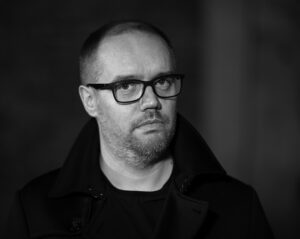 PhD in the humanities, assistant professor at the Department of Croatian Language and Literature, Faculty of Humanities and Social Sciences, University of Rijeka. He teaches courses in modern and contemporary Croatian literature. To date, he has published three books: Nuspojave čitanja [Side Effects of Reading, 2014], Između tradicije i subverzije. Časopis Kaj i kajkavska postmoderna [Between Tradition and Subversion. Journal Kaj and Kajkavian Postmodernism, 2015], and Izazovi čitanja [Challenges of Reading, 2018]. He has prepared selected works by Dubravko Ivančan (Izabrana djela [Selected Works, 2017]) and by Fran Galović (Dok večer se zmrači [When darkness falls, 2020]). He is the co-editor of the literary journal Republika [Republic] of the Croatian Writers’ Association. He is the winner of the Julije Benešić Award (2014) for literary criticism.
Katarzyna Lukas
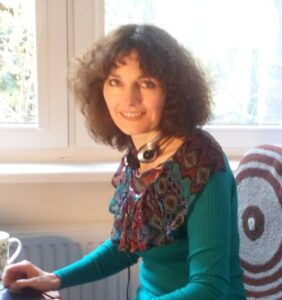
Dr hab. in the humanities, professor of the University of Gdańsk, works at the Institute of German Philology UG. Katarzyna Lukas graduated in German Studies at the UAM. She is the author of the following monographs: Fremdheit – Gedächtnis – Translation: Interpretationskategorien einer kulturorientierten Literaturwissenschaft (2018); Obraz świata i konwencja literacka w przekładzie. O niemieckich tłumaczeniach dzieł Adam Mickiewicza (2008; German edition: Das Weltbild und die literarische konvention als Übersetzungsdeterminanten, 2009) as well as articles on German literature, translation theory, literary comparatistics and cultural memory issues. She has co-edited collective volumes, including Translation im Spannungsfeld der “cultural turns” (2013). Together with Andrzej Kątny and Czesława Schatte, she publishes the series “Danziger Beiträge zur Germanistik” in the Peter Lang publishing house.
.
Leszek Małczak
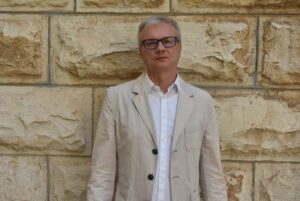
Dr hab. in the humanities, university professor at the Institute of Literary Studies of the Faculty of Humanities of the University of Silesia in Katowice, editor-in-chief of the periodical “Translations of Slavic Literatures”; researcher in South Slavic literatures, his main field of interest is Croatian literature and culture; his scientific interests focus on the phenomenon of regionalism, Croatian-Polish and Polish-Croatian cultural contacts, literary and cultural comparative studies, as well as history, theory and practice of translation. He has published, among others, three monographs: Wiatr w literaturze chorwackiej. O figurze literackiej wiatru w XIX i XX wieku literacjach chorwackim strefyródziemnomorskiej (Poznań, Wydawnictwo Naukowe Uniwersytetu Adama Mickiewicza, 2004), Croatica. Literatura i kultura chorwacka w Polsce w latach 1944–1984 (Katowice, Wydawnictwo Uniwersytetu Śląskiego, 2013), Od ideološkoga do subverzivnoga prijevoda. Hrvatsko-poljske kulturne veze od 1944. do 1989. (Zagreb, Alfa, 2019). Leszek Małczak is the co-editor of the selection of contemporary Serbian drama Serbska ruletka. Dramat serbski po 1995 roku. Wybór tekstów (the authors of the selection are A. Cielesta, D. Zwierzchowska. Edited by. A. Cielesta, L. Małczak, D. Zwierzchowska. T. 1–2. Katowice, Wydawnictwo Uniwersytetu Śląskiego, 2011) and two selections of contemporary Croatian drama: Kroatywni. Croatian drama after 1990. Selection of texts. Vol. 1–2. (Introduction by Leo Rafolt. Afterword by Leszek Małczak. Editors K. Majdzik, L. Małczak, A. Ruttar. Editorial cooperation M. Stanisz. Katowice, Wydawnictwo Uniwersytetu Śląskiego, 2012) and Nie(tylko) fragmenty. Wybór nowych dramatów chorwackich. Vol. 1 and 2, eds. Gabriela Abrasowicz, Leszek Małczak. Katowice, Wydawnictwo Uniwersytetu Śląskiego.
Suzana Marjanić
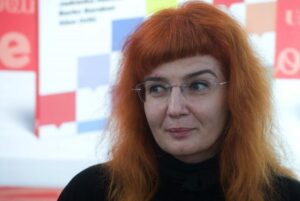
Suzana Marjanić is on the staff at the Institute of Ethnology and Folklore Research in Zagreb (Croatia), where she realises her interests in the theories of ritual and myth, critical animal studies and the performance studies. She published the book Voices of “Bygone Days”: Transgressions of Worlds in Krleža’s Notes 1914-1921/22 (2005), Chronotope of Croatian Performance Art: From Traveleri until Today (2014) and The Topoi of Performance Art: A Local Perspective (2017). The book The Chronotope of Croatian Performance Art: From Traveleri until Today (2014), which is the first history of performance art in Croatia, won the Annual award for the Croatian Selection of AICA and the National Award for Science. She co-edited seven collections, for instance, the collection Ecofeminism: between Women’s and Green Studies (2020) with Goran Đurđević and Cat-Collection: from Bastet to Catwoman (2022) with Rosana Ratkovčić. She is a member of Animal Friends Croatia from 2001.
Igor Medić
 Ph.D. works as a research associate in the Department for Croatian and European medieval literature at the Old Church Slavonic Institute in Zagreb, Croatia. He graduated in Croatian language and literature and Comparative literature from the Faculty of Humanities and Social Sciences, University of Zagreb, where he also completed his doctoral research entitled Oscar Wilde’s Aestheticism and Croatian Literature of Early 20th Century under the mentorship of Professor Lada Čale Feldman. He is working as an external associate at the Department of Comparative literature, collaborating on the scientific project Transmission, Resistance, Palimpsest: Text Re-figurations. He regularly participates in professional and scientific conferences and publishes works on the influence of Wilde’s aestheticism on Croatian literature of the early 20th century and on Croatian literature in general.
Piotr Misztela
 PhD, literary historian. He graduated from Slavic studies (bachelor’s degree) and Polish philology (bachelor’s and master’s degree) at the University of Warsaw. He cooperates with the Institute of Literary Research of the Polish Academy of Sciences, where in 2022 he defended with distinction his dissertation examining the issue of the reception of Stanisław Przybyszewski’s oeuvre and legend in Bulgaria. His researches focus mainly on the Polish and Bulgarian literature of the second half of the XIX century and of the beginning of the XX century.
Tea Rogić Musa
 Tea Rogić Musa, Ph.D., is a lexicographer in the Miroslav Krleža Institute of Lexicography in Zagreb, where she has been working since 2004. She is an editor in the field of literature on the project Croatian Biographical Lexicon. Her doctoral dissertation was on the metaphoric images in the poetry of the Krakowian avant-garde. She is a higher research scientist in the field of philology. As a literary historian, she has written about Croatian-Polish literary connections in the 19th and the first half of the 20th century, poetry of the modern Croatian and Polish literature, as well as researched literary-historical documents that deal with the literature, especially poetry, of the aforementioned periods.
Andrij Saweneć
 PhD in the humanities, Assistant Professor at the Department of Translation Studies and Slavic Languages of the John Paul II Catholic University of Lublin, researcher in translation and translator. His academic interests focus on cultural and social aspects of artistic translation, theory and practice of poetic translation and Polish-Ukrainian literary ties. He published, among others, the monograph Poezìâ u perekladì: “ukraïns’ka” Šimbors’ka (2006). He translated into Ukrainian a selection of poems by Wisława Szymborska (bilingual editions): Versìâ podìj / Wersja wydarzeń (2005) and Može, ce vse / Może to wszystko (2011), as well as Józef Czechowicz’s poetry collection Poema pro mìsto Lûblìn / Poemat o mieście Lublinie (2005) and the poetry anthology Lûblin zdalâ, Lûblin zbliz’ka / Lublin z dala, Lublin z bliska (2017). Andrij Saveneć translated novels by Salman Rushdie and Ernest Hemingway from English into Ukrainian. He translated into Polish from Ukrainian and published, among other works, Yurko Gudz’s poem Barykady na Krzyżu (2014), Mykola Riabchuk’s collection of feuilletons Poprzednie życie (2018), and Orest Drul’s river interview with Yuri Andrukhovych and Oleksandr Boychenko Worochtarium (2019). He is the co-editor of the Raport o stanie kultury i NGO w Ukrainie (2012), as well as the co-editor of the publishing series of the Culture Workshops in Lublin entitled “Wschodni Express”.
Lucyna Spyrka
Dr hab. in the humanities, Assistant Professor at the Institute of Literary Studies of the University of Silesia in Katowice, researcher of West Slavic literatures and cultures, in particular the Slovak one. Her scientific interests focus on Polish-Slovak cultural contacts, literary and cultural comparative studies, drama and theatre aesthetics as well as problems concerning the theory, history and practice of translation. She is the author of monographs, including Radošinské naivné divadlo – między konwencją a kontestacją (2004) and Dramat słowacki w Polsce. Przekład w dialogu kultur bliskich (2016). She has also translated scientific and artistic texts from Slovak and Czech, including J.Ch. Korec: Po barbarzyńskiej nocy (1994).
Žarka Svirčev

Magdalena Ślawska
PhD in the humanities, Assistant Professor at the Department of Serbian and Croatian Studies in the Institute of Slavic Studies, University of Wrocław. She is a member of the Centre for Research in Children’s and Young Adult Literature at the University of Wrocław. Her research interests focus on Croatian children’s literature and its reception in Poland, yugonostalgia and post-Yugoslavian autobiographical prose. She is the author of the monograph Proza autobiograficzna pokolenia jugonostalgików (2013); she has co-edited the collective monograph Słowiańszczyzna dawniej i dziś – język, literatura, kultura. Monografia z studiów Slavistycznych IV(2020). She is also the co-editor of the journal “Slavica Wratislaviensia. Pamięć” (2021, no. 173).
Milan Trenc
Milan Trenc was born in Zagreb, Croatia where he graduated in graphic arts and film direction. In 1991 he moved to New York where he created over a thousand illustrations and covers for major American newspapers and magazines including Time, The New York Times, The Wall Street Journal, The New Yorker, Business Week, Fortune, Washington Post, etc. and Sherry Frumkin Gallery, Los Angeles. In the USA he exhibited works inspired by his published materials most notably at Art in General, New York. His comic strips appeared in Heavy Metal Magazine and his children’s book, The Night At the Museum; (Baron’s 1993) became a Twentieth Century Fox feature movie directed by Shawn Levy, starring Ben Stiller. His films include “Ghoststory”(1989), “The Big Time” animated, 1987) and “Zen Stories” (2000). For his illustration work he received New York based Print Magazine Excellence Award in 1993 and the American Society of Publication Designers award in 2003. In 2006. his work was presented in an extensive retrospective at Gallery Klovićevi Dvori, Zagreb. He is currently teaching Film direction at the Academy of fine arts in Zagreb.
Dorota Żygadło-Czopnik
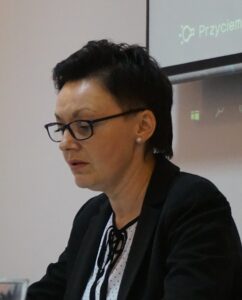 PhD in the humanities, Assistant Professor at the Department of Bohemian Studies of the Institute of Slavic Philology at the University of Wrocław. Her scientific interests focus mainly on the image of Czech literature and culture after the Velvet Revolution of 1989, modern Czech theoretical thought (achievements in Czech literary theory and theatre studies) and reception of Czech literature in Poland. She is the author of the monograph W kręgu czeskiej semiotyki teatru. Ivo Osolsobě jako teoretyk teatru i musicalu (2009); she is also the editor of the journal “Miscellanea Posttotalitariana Wratislaviensia. Elity w krajach Europy Środkowej i Wschodniej po roku 1989” (2015, no. 3).